
Breadcrumb
Strategy Builder: Overview, Key Factors, Types
0/5 Stars Reviews (0) | 31 Jan 2025 / | Financial News | Shekhar D | Visitor's : 33
Strategy Builder
Setting up a strategy builder
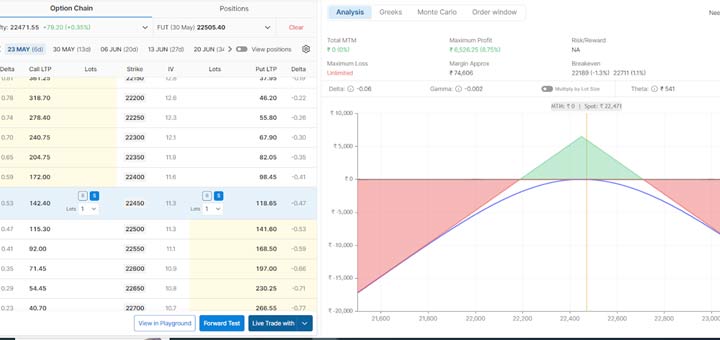
Strategy builders are devices or websites designed to make it easier for traders to develop, check, and execute their trading strategies. The setup involves the following stages:
1. Select the platform. Wisely: Choosing a platform for strategy builders that serves your trading needs. Popular choices that traders prefer for this type of work are TradingView, MetaTrader, broker-specific platforms, and so forth.
2. Create an Account: Sign up and go through the verification process.
3. Platform Configuration: Customize your platform and get market feeds, charts, and indicators together.
4. Understanding the UI: Invest in training specific to your platform, allowing you to explicitly explore the interface. You will acquire skills such as dragging and dropping, coding, and more. Train on backtesting modules.
5. Integrate: Create a link between your trading account or broker API for seamless execution once the strategies go live.
Strategy, design, and management
At the core of a strategy builder, it is important to understand how to effectively create and manage strategies. Here’s how:
1. The form of the trading objective:
Clearly define your goals, such as risk tolerance, target returns, and preferred time frame.
Identify the types of strategies: scalping, swing trading, and long-term investing.
2. Developing the Strategy:
Assign a good trading entry signal and exit signals using technical-plus chart indicators.
Set your limit stop order and target profit.
If you have access to a translation platform, you can use it for coding. There are numerous Pine Scripts available for use with TradingView or MQL MetaTrader [opt] and beyond.
3. Testing:
Backtest the strategy against historic data to see its performance.
Analysis of the win rate, the drawdown rate, and the profit factor
4. Optimization and adjustment:
Tweak the parameters to enhance your strategy for effectiveness.
Avoid overfitting while making sure the strategy works well under different market conditions.
5. Save and Tag:
Label strategies to simplify differentiation.
Keep a repository to track changes and compare versions.
Testing and analyzing the paper trade
Paper trading via the building platform will allow traders to engage in real-time testing of the strategies under live market conditions without real capital being put into the trading. To maximize this lead, follow these steps:
1. Enable Paper Trading: Use the paper trade platform to turn on paper trading.
2. Simulate Trades:
Put the strategy to the test in live market conditions to measure its real-world performance.
Document trades with metrics, like trade rate, slippage, execution speed, etc.
3. Analyze Results:
Compare paper trading results with those from backtesting.
Notice the differences and tweak your strategy in accordance with them. Hence you will know how to avoid emotional distractions when handling either live or backtesting data.
Live Execution and Trade Management
To ensure a smooth execution, the strategy undergoes these steps when it is ready for real-time activation.
1. Launch Live Trading:
Connect the system to the live trading account or broker API.
Cross-check that all parameters and connections are correctly set.
2. Check Performance:
Keep overseeing all trades to agree with the approach.
Constantly use signals to warn you about important events, like entering trades or stop-loss hits.
3. Trade Management:
Adapt with each market condition with the level of stop-lossing and take-profiting in rapid dynamicity.
Connect and let the trades flow in, regardless of what you perceive as market conditions that deviate significantly from the norm.
4. Record and Review:
Create an immediate or ongoing list of effective trading systems for the upcoming analysis.
Use this trade log for information to improve performance.
Use the automation.
Examples of more useful performance;
1. Full automation: The strategy is entirely skill-free in application.
2. Several markets allow the use of bots or algorithms.
3. Multi-Timeframe Optimization of Applied Scenario: Develop strategies that are trend-driven and applicable across multiple timeframes.
4. Take Action with Alerts in the Real World:
Put selected conditions without delay; once the conditions are obtained, it flashes.
Risk Ballast: Automated Position Volume Calculation
Properties that adjust stop methods are trailing stops and exit-based bonus instruments.
5. Social sharing: Individuals can share ideas or access pre-designed shared ideas.
The strategy builder is an invaluable tool for traders aiming to create, test, and manage effective trading strategies. Through its application and a structured approach, traders can improve decision-making, mitigate risks, and increase profits. Be it a beginner or an experienced trader, the right strategy builder has the potential to put life into a trading journey.