
Breadcrumb
Indian Stock Market Option Versus Commodity Trading
0/5 Stars Reviews (0) | 05 Feb 2025 / | Option Trading | Shekhar D | Visitor's : 386
Trading options in the stock market and trading in the commodities market present diverse opportunities and risks.
C Option Trading
Trading in the financial markets provides several opportunities for the investor, and two of the most prominent forms of trading are options trading on the stock market and commodity trading. While each of these trading strategies shares some common features, they differ significantly with respect to market behavior, risks, and profits. With a deeper understanding of the differences and benefits of each, they may enable the investors to choose the right path to achieve their financial goals.
This article will present a qualitative evaluation of Indian options trading on stock markets against commodity trading, illustrating the form of perspective trading, benefits, and frequently asked questions.
What is option Trading on the Indian stock market?
The Indian stock market allows investors to purchase or sell options contracts linked to underlying securities or indices. Investors, in this type of method, acquire the right but not the obligation to buy the underlying product in the future or sell it at a predetermined price (strike price) before or on an expiry date.
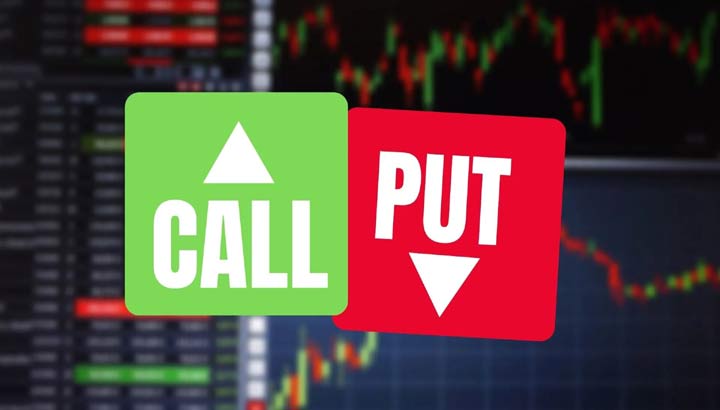
Call options provide an investor with the right to buy an underlying asset in the future.
Put options on the offer to sell the underlying asset in the future.
In India, option trading predominantly exists on indices like the Nifty 50 or Sensex and the stocks of certain companies listed on the National Exchange (NSE) or Bombay Stock Exchange (BSE).
What is commodity trading?
To choose and deal with commodity contracts is to choose and trade in a standardized agreement that enables sellers and buyers to trade away a specified amount of a commodity at a rate previously stipulated. These commodities range from agricultural products, metals, and energy-related products to other raw materials.
Types of Trades in Options Trading vs. Commodity Trading
Types of Trades in Options Trading in the Stock Market
1. Long Call: Purchasing a call option, anticipating that the price of the basic asset will rise.
2. Long Put: Buying a put, anticipating that the price of the basic asset will fall.
3. Covered Call: Holding a position short in the stock while writing a call option on it to generate additional income.
4. Protective Put: Holding the stock in a position while simultaneously buying the put option for hedging against the possibility that the price could fall.
5. Straddle: This strategy involves purchasing a long call and a long put on the same asset, both with the same exercise price and expiry date. It involves taking a risk on the price's potential to move either upwards or downwards.
6. Strangle: This strategy resembles a straddle, but it necessitates the use of different strike prices for both the call and put options, thereby expanding the range of possible price movements.
Types of Trades in Commodity Trading
1. Futures Contracts: This is a contract that obligates the buyer to buy (or the seller to sell) the underlying commodity at a future date at a pre-specified price.
2. Commodity ETFs: ETFs trading on the exchange store commodities or baskets of commodities.
3. Spot Trading: Trades involving the physical exchange of a commodity against prompt cash from immediate delivery (though uncommon in India).
4. Options on Futures: These are options not unlike the stock option but based on the futures contracts in commodities.
5. Commodity Indices: Indices that collectively track the performance of a collection of commodities, such as energy, metal, or agricultural products.
Benefits of Options Trading in the Stock Market
1. Leverage: Options enable you to manage good exposure to shares with very limited capital, thus increasing the possible return dramatically.
2. Limited Risk: The contract premium represents the maximum risk associated with an option.
3. Flexibility: You can utilize options for various operations differing from hedging, speculation, and income creation.
4. Vast Variety: There are options for a myriad of stocks, indices, and sectors, providing excellent trading opportunities.
5. Income Generation: Selling options (e.g., covered calls) generates additional income.
Benefits of Commodity Trading
1. Diversification: Commodities offer a nice way to diversify your portfolio, especially because the commodity market often moves independently of the stock and bond markets.
2. Hedge against Inflation: Commodities, especially gold and energy products, enjoy a rise when inflation is prevalent.
3. Global Exposure: Commodity prices vary depending on the global situation, offering exposure to international economic events and markets.
4. High Level of Liquidity: Major commodities like gold, crude oil, and silver tend to be quite liquid, which assures being able to enter and exit trades fairly quickly.
5. Leverage: Leveraging, like in option trading, allows a few traders to be in control of high positions with pretty small capital balances.
Risks and Challenges of Options Trading vs. Commodity Trading
Options Trading Risk:
Time Decay: Approaching expiry, the value of an option decreases due to selected time payback losses, and therefore, one may incur a loss.
Volatility: If there are price fluctuations, they can yield profits, but if the price falls too quickly due to poor management, losses could increase.
Complexity: Since all these factors are tied together and lots of new terms are involved, for new traders, these strategies appear complex.
Commodity Trading Risks:
Price Volatility: Commodities are internationally used for many purposes and represent value, leading to high volatility in their prices, which is a result of, among other factors, supply-demand disruptions, natural calamities, geopolitical tensions, and political issues.
Leverage: Profit potential is high, but so is the risk of large losses.
Market Factors: Political happenings, natural calamities, currency variations, and global market developments are key factors that exist in this market.
Summary
Trading options in the stock market and trading in the commodities market present diverse opportunities and risks. Flexibility, limited risks, and high leverage make options trading an attractive proposition for traders seeking to relish stock moves with a mere investment of capital. At the same time, commodity trading is typical of exposure to international markets and raw materials, making it a natural hedge against inflation to keep a diversified portfolio.
The decision to option trade or commodity trade depends on the risk appetite of the investor, his financial objectives, and his knowledge of the market. Both markets have many opportunities, but success would require the use of comprehensive strategies and the establishment of a process that ensures continuous learning and disciplined risk management.
The most common commodity trading prospects are going short on commodity futures contracts.
Commodity exchanges such as the Multi Commodity Exchange (MCX) and the National Commodity and Derivatives Exchange (NCDEX) trade these contracts.