
Breadcrumb
ICT vs. SMC: Market Structure and Trading Strategies
0/5 Stars Reviews (0) | 02 Feb 2025 / | Option Trading | Shekhar D | Visitor's : 34
Two dominant methodologies for finance traders, particularly in forex, stocks, or crypto trading, are the Inner Circle Trader (ICT) concepts and the Smart Money Concepts (SMC).
ICT vs. SMC: Market Structure and Trading Strategies
Two dominant methodologies for finance traders, particularly in forex, stocks, or crypto trading, are the Inner Circle Trader (ICT) concepts and the Smart Money Concepts (SMC). Both concepts involve an in-depth study of market structure, price action, and institutional trading methodologies. However, the differences will be difficult for any trader to grasp without understanding their comparison.
Market Structure: ICT vs. SMC
ICT Market Structure:
ICT utilizes "algo price delivery" to define the essential components of market structure based on volume and price, following a non-random logic process.
1. Market Cycles: Accumulation, Manipulation, and Distribution Phases.
2. Key Price Levels: Equilibrium, Fair Value Gap (FVG), and Optimal Trade Entry (OTE).
3. Order Flow: The basic premise of the system rests on reading higher highs/lows in order to infer the direction.
SMC Market Structure:
SMC makes market structure less complicated and more clear, thereby removing any ambiguity during price action analysis.
1. Swing Points: Higher Highs (HH), Higher Lows (HL), Lower Highs (LH), and Lower Lows (LL).
2. Break of Structure: entering a new price level opposite the one preceding it.
3. Supply and Demand Zones: Important price zones where institutions are accumulating or distributing positions.
Price Action: ICT vs. SMC
ICT Price Action:
Major traders' price algorithms dominate ICT trades. Key components include the above-mentioned:
• Liquidity Pools: Pooling of stop-loss orders in certain areas.
• Institutional Levels: Round numbers and highs/lows of the day/week.
• Time-Based Analysis: Sessions like London Open or New York Open that line up with institutional activity.
SMC Price Action:
The price action deals with:
• Candlestick Patterns: Engulfing candles, pin bars, and imbalances.
• Zone Refinement: Making use of put-and-take price inefficiencies/order blocks to spot ideal entries.
• Risk-Reward Optimization: Maximizing rates of return relative to risk profiles.
Key ICT Concepts
ICT introduces various ground-based concepts that set it apart:
1. Fair Value Gap (FVG): Institutional orders leave a price imbalance.
2. Optimal Trade Entry (OTE): Entering trades at Fibonacci retracement levels, often between 61.8% and 79%.
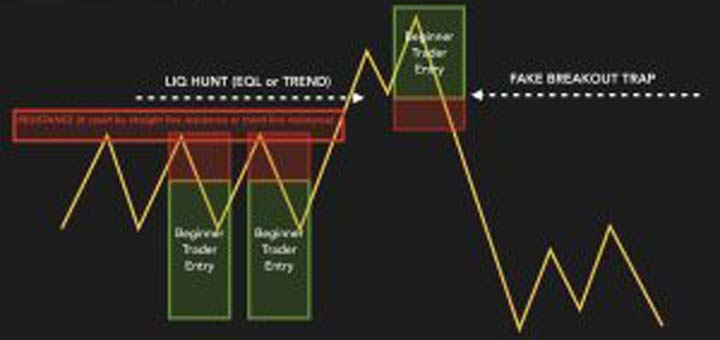
3. Liquidity Grab: A kind of price manipulation to create stop-loss orders and allow institutions to build positions.
4. Judas Swing: A false breakout fakeout during high market sessions aimed at trapping retail traders.
ICT Trading Strategy
The ICT Trading Strategy aims to discern and exploit institutional activity.
1. Session Bias: Aim for high-probability trading times (London Open, for example).
2. Liquidity Pools: Start looking for areas of aggregated stop-loss orders.
3. Entry Techniques: Chat about Fair Value Gaps and Optimal Trade Entries.
4. Exit Strategies: Target other liquidity pools, which may coincide with large price levels.
Manipulation of Prices by Institutional Traders
Institutional traders alter prices so their vast orders can be executed without causing much price movement. Endeavors include:
1. Liquidity Hunts: Making the price action move into retailers' stop-loss trapping areas.
2. Wrong-side Breakouts: Blowing to follow the prevailing trend, then reverses.
3. At fixed-time intervals, they act in a directed manner by using low liquidity as a cover.
Liquidity Pools
Liquidity pools refer to the areas where buy or sell orders cluster. Institutional traders primarily manipulate these areas for various purposes.
1. Defenestrate Retail Stops: To create enough volatility so they themselves can build a large position.
2. Execute Orders Efficiently: This includes targeting those high-volume areas and so-much-absorbed-by-the-institutions blocks such that there is minimal to no slippage.
Many traders have, in an enigmatic way, realized that differentiating with ICT and SMC principles and strategies must be matched with market reality to make true or informed judgments, which might improve performance.